Happy Saturday Font: A Handwritten Touch for Authentic Design
Understanding the Personality Behind the Typeface
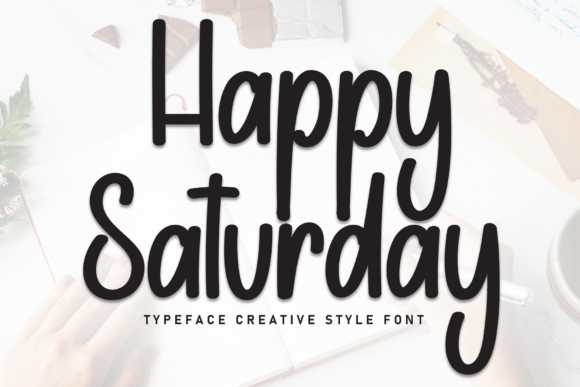
There is a specific kind of visual warmth that digital text often struggles to convey. We live in a world dominated by geometric sans-serif fonts and rigid corporate typefaces, which can sometimes make a brand feel distant. This is exactly where Happy Saturday Font steps in. It is not just a collection of letters; it is a carefully crafted handwritten font designed to bridge the gap between professional polish and human touch. When you look at the curves and strokes of this typeface, you immediately notice that it avoids the rigid uniformity of standard text. Instead, it offers a flowing, organic movement that mimics the natural inconsistencies of ink on paper.
The visual characteristics of Happy Saturday are defined by its legibility despite its decorative nature. Many script font styles sacrifice readability for flair, but this particular design maintains a balance. The letters connect in a way that feels effortless, creating a rhythm that guides the eye from left to right. It possesses a timeless quality—it doesn't look overly trendy or bound to a specific design decade. This makes it a versatile design asset for projects that need to feel current yet enduring. Whether you are working on a vintage-inspired aesthetic or a modern minimalist layout, the font adapts to the context without losing its identity.
Strategic Applications for Branding and Marketing
For entrepreneurs and brand identity strategists, choosing a typeface is a psychological decision. You are selecting a voice for your business. Happy Saturday Font works exceptionally well for brands that want to communicate approachability, creativity, and authenticity. Think about the industries where trust is built through personal connection: boutique bakeries, lifestyle coaching, handmade crafts, and independent publishing. Using this font in your logo design signals to your audience that there is a real person behind the business who cares about quality and detail.
In packaging design, the font shines brightly. Imagine a coffee bag label or a candle box. The tactile nature of the product is enhanced by a handwritten font that suggests the item was made with care. It moves away from the cold, industrial feel of mass production. However, it is crucial to understand the hierarchy. Happy Saturday is a display font, meaning it is best suited for headlines, subheadings, and logos. It is not designed for long-form body copy. Pairing it with a clean sans serif font for your descriptions creates a perfect contrast. The sans-serif handles the heavy lifting of readability, while Happy Saturday provides the personality and visual hook.
Digital Presence and Social Media Graphics
The digital landscape is noisy. Scrolling through social media feeds requires stopping power. Social media graphics that utilize Happy Saturday Font often outperform standard text because they break the visual monotony. When creating Instagram stories, Pinterest pins, or Facebook headers, this typeface acts as a focal point. It is particularly effective for quotes and call-to-action overlays. Because it is a premium font with high-quality vector outlines, it renders crisply on high-resolution screens, avoiding the blurriness sometimes associated with free alternatives.
For web design, caution is required, but the rewards are high. Using Happy Saturday for a site’s main navigation might frustrate users, but using it for section titles or a hero banner headline can drastically improve the site's aesthetic appeal. It helps in establishing a visual hierarchy that draws attention to the most important message first. This strategic use ensures that the site remains professional while still feeling welcoming and creative.
Technical Considerations and Font Pairing
When integrating a new typeface into your workflow, you must consider the technical execution. Happy Saturday Font is designed to be a creative font that complements rather than dominates. A common mistake in modern typography is using two highly decorative fonts together, which results in visual chaos. The best approach is font pairing. As mentioned, a geometric sans-serif like Montserrat or a classic serif like Garamond can ground the whimsical nature of Happy Saturday. This contrast creates a dynamic tension that is pleasing to the eye and enhances overall readability.
Another aspect to consider is the context of commercial font licensing. If you are a freelancer or a business owner, ensuring you have the correct license for commercial use is non-negotiable. This font is built for professional environments, supporting the needs of marketers, publishers, and content creators who need reliable assets for client work. Before finalizing a design, always test the font in the specific medium where it will live. Print it out to see how the ink sits on the paper, and view it on a mobile device to check legibility at smaller sizes.
Evaluating Fit for Your Project
Not every project requires a handwritten font. If you are designing a legal document or a technical manual, Happy Saturday would be the wrong choice. However, if your goal is to evoke emotion, nostalgia, or creativity, it is an excellent fit. Ask yourself: does my brand voice sound conversational? Do my products rely on visual storytelling? If the answer is yes, this typeface will likely serve you well. It works beautifully for editorial design, particularly in magazines or blogs focusing on lifestyle, travel, or food, where the imagery is rich and the tone is personal.
Ultimately, the value of a font like Happy Saturday lies in its ability to humanize digital communication. In a market saturated with automated content and generic templates, using a premium font